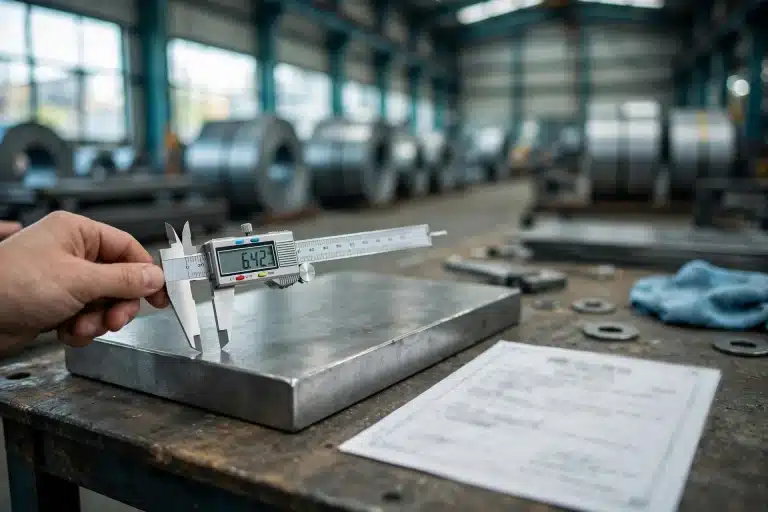
Metal prices have not moved in a straight line in 2026. Nickel has traded in a wide range, aluminium has stayed above US$3,000 per tonne for most of the year on tight stocks, and carbon steel export prices from China remain low. For buyers of stainless steel, aluminium and custom machined parts, the useful question is not where the market is today, but which cost components will move your quote and how to plan around them.
This guide summarises what we are seeing in early November 2026 and how to manage price risk when sourcing from China. Figures are indicative market references, not DILI Steel quotations.
What Is Driving Metal Prices in 2026
| Material | What is moving the price | What it means for buyers |
|---|---|---|
| Stainless steel (304 / 316) | Nickel and molybdenum costs; surplus outlook and soft downstream demand | Mill surcharges lag the market by weeks; 316 carries a clear premium over 304 |
| Aluminium | LME above US$3,000/t, very low exchange stocks, high power costs | Firm prices; tariffs and premiums vary by destination |
| Carbon and alloy steel | Low export prices and off-season demand | Favourable for plate and coil; confirm export documentation early |
| Custom machined parts | Material plus machining, finishing, inspection and freight | Design and tolerance choices often outweigh material swings |
Stainless Steel: Nickel, Molybdenum and Surcharges
Nickel is the largest raw material cost in 304 and 316 stainless steel. Published 2026 forecasts range from roughly US$15,000 to US$17,500 per tonne, reflecting a market in surplus and soft downstream stainless demand, with Indonesian supply policy as the main upside risk. Asian nickel prices were expected to ease in the fourth quarter. Mills adjust nickel surcharges with a lag of several weeks, so today’s quote may not yet reflect recent nickel moves.
316 and 316L also carry a molybdenum cost. Market sources reported the price gap between 304 and 316L at one Indonesian mill at around US$1,850 per tonne earlier this year, so specifying 316 where 304 is sufficient adds real cost.
Aluminium: Tight Stocks and Regional Premiums
LME aluminium has traded above US$3,000 per tonne for most of 2026. Exchange stocks were reported at their lowest level since 1990 in mid-October, and analysts expect a primary supply deficit this year that narrows in 2027. Regional tariffs and delivery premiums can add more to the landed price than the LME movement itself, so always compare quotes on the same Incoterms basis.
Carbon and Alloy Steel
Flat carbon steel remains inexpensive. Chinese export hot rolled coil (SS400, 3 mm) was assessed at about US$485 per tonne FOB in early November, and analysts expect coil prices to move sideways at low levels through the month. China also introduced export licence management for certain steel products from 1 January 2026, so confirm documentation requirements early in the order process.
Machined and Custom Parts
For custom parts, raw material is only one line of the quote. Machining time, tooling, finishing, inspection and freight often outweigh a swing in metal prices. Realistic tolerances, standard hole sizes and fewer setups can save more than waiting for a market dip. See our guide to CNC machining for custom parts.
Ocean Freight and Lead Time
Asia-Europe container rates firmed from their mid-October lows as carriers cancelled sailings, although several announced rate increases have been discounted in practice, and overcapacity continues to limit longer-term rates. Because freight can move week to week, confirm quote validity and Incoterms (FOB, CIF or DDP) before placing an order. Production also slows around the Chinese New Year holiday in early February 2027, so plan orders for Q1 delivery in December and January.
How Buyers Can Manage Price Risk
- Ask for a split quote. Material, processing and freight shown separately, with the nickel or LME-linked part identified.
- Agree quote validity and review dates. Short validity on volatile materials, fixed-price windows for larger orders.
- Consolidate and schedule. A blanket order with planned releases usually secures better pricing than repeated small orders.
- Match grade to environment. Use 304 indoors and in general service; reserve 316 for marine, chemical or pool applications.
- Verify what you buy. Request mill test certificates and specify PMI testing before shipment.
- Use spot stock for urgent needs. See our ready-to-ship stainless steel stock.
SS304 vs SS316: Where Grade Choice Changes Your Cost
Sourcing metal materials from China can be tricky. Often, suppliers will push Stainless Steel 304 because it’s cheaper. But is it right for your application?
In this guide, we break down the key differences between SS304 and SS316, and how to make the right choice for your project. (And yes, we supply both.)
The Core Difference
- SS304 (Austenitic): The workhorse. Great for general environments, food processing, and indoor applications. If your product isn’t exposed to saltwater or harsh chemicals, SS304 is usually sufficient.
- SS316 (Austenitic): The marine grade. Contains Molybdenum (Mo), which gives it superior corrosion resistance.
- Choose 316 if: your parts will be near the ocean, used in swimming pools, or exposed to acids.
The “Hidden Cost”
Many factories claim to sell “316,” but due to cost-cutting, they sometimes mix in cheaper metals. This is where a simple PMI (Positive Material Identification) test during inspection is crucial.
Get a Price Check Before You Order
Send us the grade, specification, quantity and destination port. Our team will return a quotation with material, processing and freight shown separately, and can arrange third-party inspection before shipment. Contact DILI Steel to get started.
Market references used in this article: Mysteel and SMM (China export steel prices, November 2026), S&P Global (nickel and aluminium outlooks, September and October 2026), Tacto (nickel surcharge guidance), FreightWaves and C.H. Robinson (ocean freight, October and November 2026). Prices change daily; treat figures as indicative.