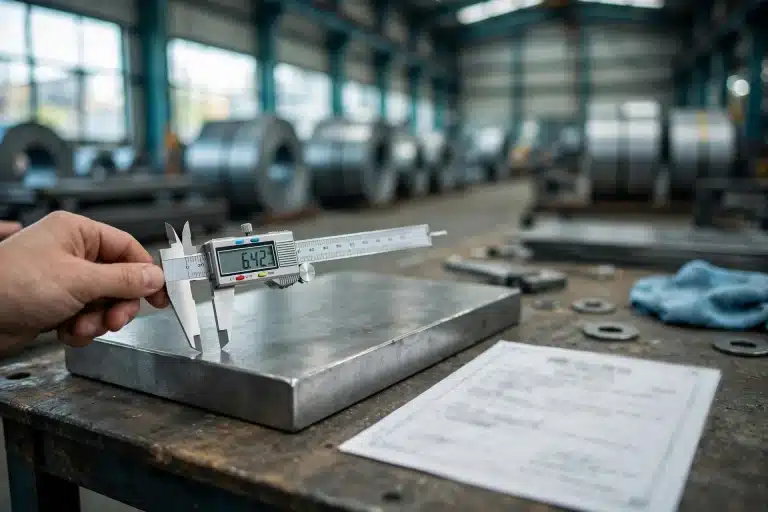
Stainless Steel: Properties, Grades, and Common Uses
Stainless steel is an iron-based alloy that resists rust and corrosion. This resistance comes from chromium — at least 10.5% — which forms a thin, invisible oxide layer on the surface. If scratched, this layer self-repairs in the presence of oxygen.
Key Properties
- Corrosion resistance – Performs well in moist, acidic, or salty environments.
- Strength – Many grades are stronger than ordinary carbon steel, especially at elevated or cryogenic temperatures.
- Formability – Can be rolled, drawn, bent, or deep-drawn into various shapes.
- Weldability – Most austenitic grades weld easily with standard techniques.
- Appearance – Readily accepts polished, brushed, or matte finishes.
Common Grade Families
Austenitic (300 series)
Non-magnetic, excellent toughness, and very weldable.
- 304 – The most widely used. Suitable for kitchenware, tanks, piping, and architectural trim.
- 316 – Contains molybdenum for saltwater and chemical resistance. Used in marine hardware, pharmaceutical equipment, and outdoor structures.
Ferritic (400 series)
Magnetic, lower cost, but less formable than austenitic grades.
- 430 – Common in appliance panels, automotive trim, and indoor decorative applications.
Martensitic (400 series)
Magnetic, heat-treatable to high hardness.
- 410 and 420 – Used for cutlery, valves, shafts, and surgical instruments where wear resistance matters.
Precipitation-hardening
- 17-4 PH – Combines high strength with moderate corrosion resistance. Often specified for aerospace and high-stress components.
Surface Finishes
- No. 2B – Smooth, reflective finish for general industrial use.
- No. 4 – Brushed finish, common on kitchen equipment and handrails.
- BA (Bright Annealed) – Mirror-like surface for decorative or sanitary applications.
- Matte – Non-reflective, often bead-blasted or etched.
Limitations to Know
- Stainless steel is more expensive than carbon steel or aluminum.
- It has lower thermal conductivity and higher thermal expansion than plain carbon steel.
- Galling (cold welding) can occur when stainless threads are tightened without lubricant.
- In low-oxygen environments or with long-term chloride exposure, some grades can suffer pitting or crevice corrosion.
Choosing the Right Grade
For indoor, dry conditions → 304 is often sufficient.
For coastal or chemical exposure → 316 is recommended.
For high hardness and wear resistance → Consider 420 or 17-4 PH.
For magnetic response or lower cost → Look at ferritic grades like 430.